The Pyrenees Insider Guide: A Local Cyclist’s Guide to Watching the Tour de France In Person
Updated: Sep 7
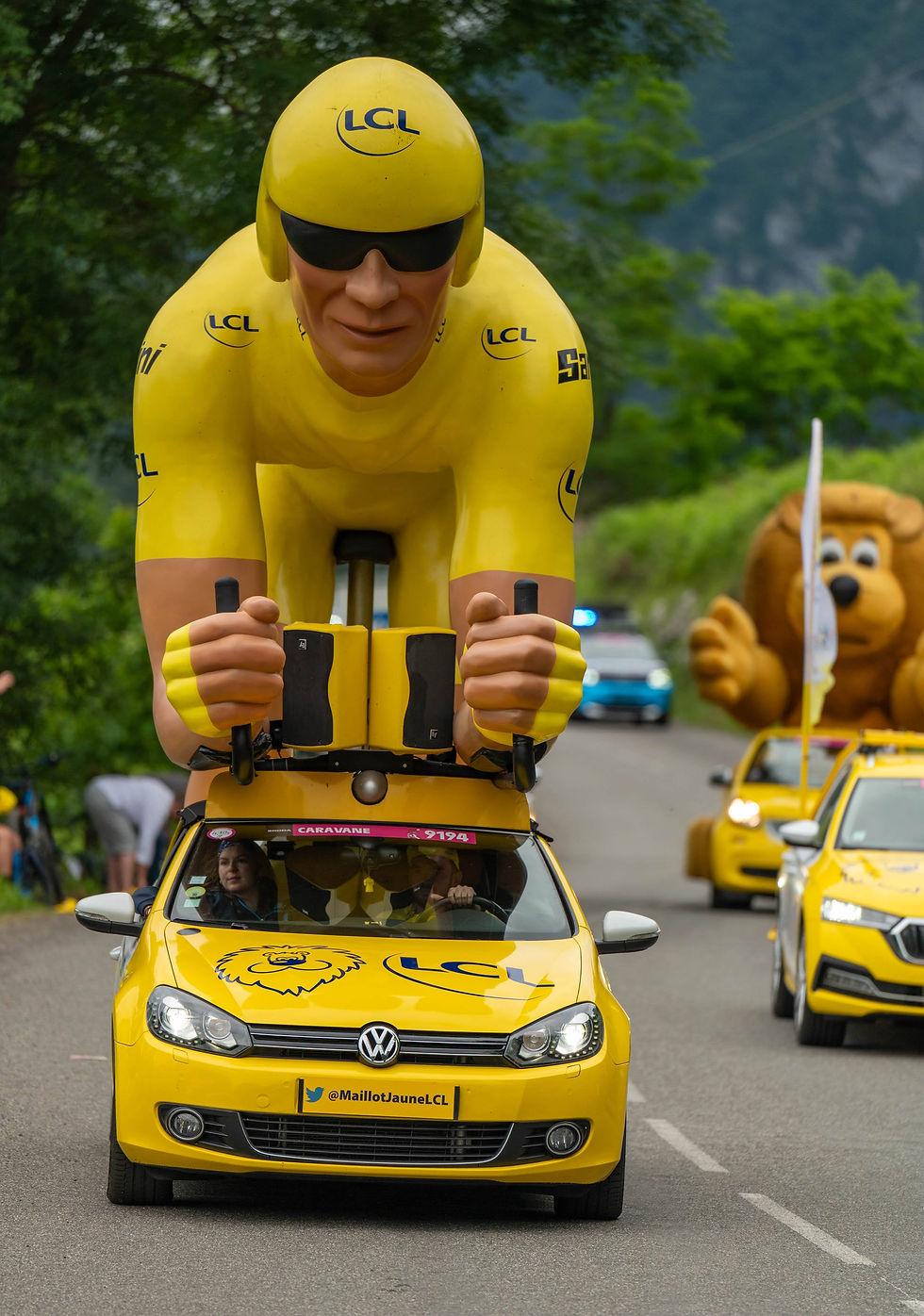
There is nothing quite like the electric hum of anticipation that settles over a French mountain pass on a July morning. As seasoned Pyrenees road cyclists, my partner Tom and I have been lucky enough to call the Ossau Valley home for the last eleven years. Living just down the road from Laruns means the Tour de France is practically our neighbour, and we have ridden out to line the roadside for every single iteration since we arrived.
If you are a road cyclist planning your first pilgrimage to see the world's greatest race, television simply does not do it justice. You cannot smell the melting tarmac, feel the rush of air as the peloton tears past at unbelievable speeds, or truly understand the gradient of a mountain selection until you are standing on it.
Whether you are looking to tackle iconic cols on your own bike or just want to absorb the carnival atmosphere, here is the ultimate, updated insider guide to planning your Tour de France spectator experience.
1. Choosing Your Stage: Mountain vs. Flat

As cyclists, our instinct is to head straight for the mountains. While the high elevation stages offer the most dramatic scenery and the chance to see riders fighting the gradient one by one, your choice depends on what kind of experience you want:
The High Mountains (Alps/Pyrenees): This is where you get the most interaction. Because the riders are travelling slower on steep inclines, you can actually see the strain on their faces, read the numbers on their jerseys, and cheer them on individually. The downside? Huge crowds and strict road closures.
The Time Trials: If you want to see every single rider, a time trial is fantastic. They leave at regular intervals, giving you hours of constant action rather than one brief flash of the peloton.
The Flat Stages: Expect a massive celebration in the departure or arrival towns, but be prepared for the actual race to pass you by in roughly fifteen seconds at 50 km/h.
2. Getting There from the UK
If you are bringing your own pride and joy (your bike, of course), driving is by far the most practical option.
Taking the Eurotunnel or a cross-channel ferry allows you to pack your car with bike racks, spare wheels, tools, and all the layers you will need for a long day on a mountain summit. From the northern ports, a drive down to the Pyrenees or Alps takes between 8 and 11 hours.
Alternatively, if you prefer to fly, you can head into regional hubs like Toulouse, Biarritz, or Pau and Tarbes - Lourdes(for the Pyrenees), or Geneva and Lyon (for the Alps), and pick up a rental car.
3. Basecamps, Accommodation, and Bike Hire
Securing your logistics requires early preparation, as the race route dictates local availability months in advance.
Finding the Right Location
Do not try to follow the Tour from town to town every day. The road closures make it an absolute logistical nightmare. Instead, pick a central "basecamp" near a key mountain pass or a town that sits between consecutive stage routes. This allows you to unpack once and ride out to the course.
Sourcing Accommodation
The moment the route is announced in October, accommodation fills up fast. Look beyond standard hotel booking platforms. Use local French holiday rental sites (like Gîtes de France) or search for cycling-specific lodges and bed-and-breakfasts in the target valleys. If everything appears fully booked, look one valley over; a 30-minute drive or a morning ride over a neighbouring ridge can save you a fortune.
Arranging Bike Hire
If you are flying light and want to rent a high-end carbon road bike, book it the same day you book your accommodation. Local bike shops along the route lease their entire premium fleets months in advance. Always confirm that the hire shop provides the correct gearing for alpine terrain, you will want compact chainsets and a generous cassette if you plan to tackle the cols yourself.
4. Cracking the French Food Code: Boulangeries & Sunday Survival
You cannot talk about spectating in France without talking about the food, but navigating French opening times requires a bit of insider strategy.
In rural France, the midday déjeuner is sacred. Standard shops, supermarkets, and pharmacies almost universally close between 12:00 PM and 2:00 PM (and sometimes until 3:00 PM in southern valleys). If you roll into a village at 12:30 PM hoping to buy sandwich ingredients, you will find yourself staring at closed shutters.
Then there is Sunday. By French law, most supermarkets and shops are closed all day on Sunday. However, there is one glorious exception: the local boulangerie.
The Bakery Strategy: Boulangeries open incredibly early—usually around 6:30 AM or 7:00 AM. On a Tour day (especially Sundays), they are the heartbeat of the valley.
Your Order: Get there the moment they open to join the queue of cycling jerseys. Grab a few traditions (the crustier, premium version of a standard baguette), some croissants, and ask them to whip up a few sandwiches mixtes (ham and cheese) for your pack.
The Golden Rule: Buy your food the evening before or first thing in the morning. Once the Tour crowds descend, village bakeries sell out of every single scrap of flour by 10:00 AM.
5. Surviving the Hexagon’s New Normal: The Heat Dome
A major shift has completely changed how we plan our Tour spectating in recent years: the emergence of the summer "heat dome" (dôme de chaleur) as the new normal in France.
We are no longer just dealing with a standard warm July day. Western Europe regularly sees stagnant, high-pressure systems trap intense heat over the continent, pushing temperatures well over 40°C (104°F). With regional authorities now given the power to alter stages under extreme red alerts, treating the heat with absolute respect is no longer optional.
When you are exposed on a barren mountain face for hours, 40°C heat can become dangerous quickly. If a heat dome is forecast, these precautions are non-negotiable:
Rethink Your Water Logistics: Double whatever you think you need. When walking or riding up a col in 40°C weather, you should consume close to a litre of fluid per hour. Bring hydration tablets (electrolytes) to replace lost salts—plain water alone won't cut it when sweating continuously.
The "Tree Line" Rule: When picking your viewing spot, look at the elevation map. If you choose a spot above the alpine tree line, you will be entirely exposed to the baking sun for five or six hours. Sacrifice the bare summit views and choose a spot further down the mountain where you can drop back into the shade of the trees while waiting.
Create Your Own Shade: Pack a lightweight, UV-blocking umbrella or a packable tarp in your day pack. Holding a shield over your head while waiting on a blazing mountain road drops the perceived temperature significantly.
The Frozen Bottle Trick: Freeze several large bottles of water the night before. Wrap them in towels inside your backpack. They will slowly melt throughout the morning, providing ice-cold water to drink and a freezing compress to press against your neck and wrists.

6. Race Day Logistics: Navigating Traffic & Closures
The Reality of Road Closures
Do not underestimate the scale of the Tour de France traffic infrastructure. For a mountain stage, the actual race road is usually shut down to vehicles 24 to 48 hours in advance of the summits, and closed entirely by the Gendarmerie (police) from early morning on the lower slopes. Neighbouring access valleys will experience massive gridlock. Download the app Waze, which is an official Tour partner and updates real-time road closures dynamically during the race.
Getting to the Course
The absolute best way to arrive on the day is on two wheels. While cars are banned, gendarmes will typically allow cyclists to ride up the closed course until a few hours before the publicity caravan arrives. Riding past thousands of cheering fans already lined up on the climbs is an unforgettable experience that makes you feel like a pro for a day.
Finding the Perfect Spot
Avoid the dead centre of a mountain summit or the exact line of a categorised sprint; these areas are heavily barricaded and packed tightly with spectators. Instead, look for a steep hairpin bend roughly 2 to 3 kilometres from the top of a climb. The race slows down beautifully at the bends, giving you an excellent vantage point to view the riders as they navigate the turn.
Timing and the Caravan
If you want a premium spot on an iconic mountain pass, you should aim to be in position at least three to four hours before the riders are scheduled to arrive. This ensures you are safely off the road before the Caravane Publicitaire, the famous procession of promotional vehicles, comes through to throw out hats, jerseys, and treats roughly 1.5 to 2 hours ahead of the peloton.
Give yourself a massive time buffer so you don't get caught on the wrong side of a closure.
7. What to Pack in Your Day Pack
Weather in the mountains can change in a heartbeat, shifting from extreme heat to a sudden alpine storm. Always pack a lightweight backpack containing:
A high-quality packable rain jacket or windbreaker (essential for the fast, chilly descent after the race passes).
Sufficient water, electrolytes, and your bakery stash.
Sunscreen (SPF 50+) and a cap.
A small power bank for your mobile phone (mobile networks frequently crash when 50,000 people crowd onto one mountain, which drains your battery searching for a signal).
A small trash bag: While you are enjoying the festive chaos and grabbing those flying freebies from the caravan, keep a close eye on your wrappers and gear. Please do not litter. The mountain ecosystems are incredibly fragile, and a clean roadside keeps the race welcome here for generations to come. Carry out everything you bring in.
8. How to Be a Great Spectator
The beauty of road cycling is the lack of barriers, which relies entirely on mutual respect between the fans and the peloton.
First and foremost, give the riders room. It is exhilarating to be close to the action, but always step back well before they reach your position. Keep a firm eye on children and pets at all times, and never attempt to run alongside the athletes on steep inclines—it crowds their space and can cause catastrophic crashes.
Final tip from Tom and me: Cheer for everyone. The GC contenders battling for the yellow jersey get plenty of noise, but the real heroes of the Tour are often the dropped riders, the domestiques, and the sprinters forming the gruppetto at the back, fighting simply to make the time cut. They deserve the loudest cheers of the day.
Final Thoughts
Watching the Tour de France in person is a sensory experience that stays with you long after the final riders disappear around the mountain bend. It is a celebration of human endurance set against some of the most beautiful landscapes on earth.
Ultimately, there is nothing quite like witnessing the Tour live to completely revitalise your own cycling. Standing roadside, feeling the literal rush of wind as the world's best athletes fly past, has a way of resetting your perspective. It will give you that fire and motivation to jump back into your own training, push up those steep gradients, and relentlessly improve on the specific areas you feel you need to work on. Plan, get your bakery orders in early, respect the heat, and let that elite energy fuel your own goals to keep the pure passion of the sport alive!

If you are chasing the Peloton, here is the 3-Step Recovery Guide for Amateur Riders:
Catching the Tour de France on two wheels is an absolute thrill, but tackling those legendary cols to watch the race leaves your legs completely shattered. To bounce back fast, steal the "3 R's" straight from the pro peloton:
1. Rehydrate Immediately: Your body needs more than plain water after a hot day in the mountains. Pros often reach for tart cherry juice right after a stage—it delivers fast-acting carbs and is packed with antioxidants that naturally blunt muscle inflammation.
2. Refuel in the 30-Minute Window: Your muscle glycogen tanks are empty. Grab a recovery shake or Greek yoghurt with a banana within 30 minutes of stepping off the bike. Missing this crucial window means you'll start tomorrow's ride deep in a deficit. Follow it up later with a clean meal of lean protein and complex carbs.
3. Rebuild with Sleep: You don't need fancy compression gadgets; you need rest. Elevate your legs against a wall for 15 minutes to drain fluid, then ruthlessly protect your sleep. High-quality sleep is the single most powerful tool the pros use to naturally repair deep muscle damage.
The Takeaway: You conquered the climbs; now give your body the respect it deserves. Nail the post-ride window, eat clean, sleep well, and get ready for the next stage.
Photography © Tom Materman and Debbie Kennedy
IG: @pedal.pixel and @debbiepyreneesvelo


Comments