Mont Ventoux
Updated: Aug 4
Mont Ventoux, 1,912 m
As the name suggests (Ventoux means windy in French), it can get windy at the summit, especially with the mistral; wind speeds have been as high as 320 km/h.

Mont Ventoux (1,912 m) - Provence
CLIMB PROFILES:
Departing from the east (Sault):
Length 25.6 km
Altitude at depart: 759 m
Altitude at the end: 1,912 m
Average percentage gradient 4.5%
Maximum 12%.
Departing from the west (Malaucène):
Length 21.2km
Altitude at depart: 377 m
Altitude at the end: 1,912 m
Average percentage gradient 7.2%
Maximum 12%
Departing from the south (Bédoin):
The most famous side:
Length 22.7 km
Altitude at depart: 290 m
Altitude at the end: 1,912 m
Average percentage gradient 7.15%
Maximum 10.8%
Depending on your strength and ability, it can be accomplished in slightly more than an hour.
Visible from 100 kilometres in every direction, the summit of Mont Ventoux seems to have a perpetual snow covering, even during the peak of summer. Its appearance is reminiscent of the moon, which is why it is known as "Mont Bald."

Mont-Ventoux, located in the Provence region of France, stands tall as a symbol of endurance and challenge for cyclists worldwide. Its reputation precedes it, with a history steeped in glory and tragedy. The mountain's harsh beauty is a siren call for those seeking to test their limits and push themselves to the extreme. The ascent of Mont-Ventoux is not just a physical feat but a mental battle against self-doubt and exhaustion. The road to the summit winds through a barren landscape, devoid of vegetation, with the infamous Mistral winds adding an extra layer of difficulty to the climb. The gradient of the slopes seems to defy gravity, making each pedal stroke a struggle against the mountain's relentless pull.
The weather on Mont-Ventoux is unpredictable, with sudden changes that can catch even seasoned riders off guard. Each turn on the ascent reveals a new challenge, a new opportunity to either conquer or be conquered by the mountain. The echoes of past triumphs and failures resonate in the air, adding a sense of gravitas to the climb. The summit, a desolate moonscape devoid of life, offers a panoramic view that is both breathtaking and humbling. Those who dare to take on Mont-Ventoux know that they are not just battling a physical obstacle but confronting their fears and limitations. The mountain demands respect and offers no quarter to those who underestimate its power. To conquer Mont-Ventoux is to earn a place among the elite, to join the ranks of those who have faced the ultimate test of endurance and emerged victorious.

When I first delved into the world of cycling back in 2015, a whole new realm of possibilities opened up before me. The allure of conquering the renowned mountain roads of France beckoned me, and among them, Mont Ventoux in Provence stood out as a formidable yet enticing goal. As I pedalled my way through these majestic landscapes, I found myself immersed in a symphony of natural beauty and physical exertion.
The yearning for adventure and the thrill of pushing my limits ignited a spark within me. With each ascent, I felt a surge of endorphins coursing through my veins, accompanied by the exhilarating rush of adrenaline that comes with tackling demanding physical challenges. The sheer magnitude of the task ahead fueled my determination, propelling me forward with unwavering resolve. It is this very essence of challenge that resonates deeply within me, serving as a constant source of motivation and inspiration. The pursuit of conquering Mont Ventoux symbolises not just a physical conquest, but a journey of self-discovery and personal growth. The relentless pursuit of overcoming obstacles mirrors the resilience and tenacity that define my approach to life.

This mountain takes no prisoners. Mental toughness, as well as physical fitness, is required.
We departed from Sault, a charming village nestled on a hilltop offering breathtaking panoramic views of endless lavender fields that stretch as far as the eye can see. The air was filled with the sweet scent of honey, creating a sensory delight for all who visited. As we strolled through the main square, we were greeted by a bustling scene of quaint cafés offering a variety of local delicacies and a convenient spot to refill our water bottles with fresh, cold water.
Our journey led us towards Le Chalet Raynard along a rugged road that meandered through the picturesque countryside. Despite the late season, the sun still beat down with intensity, casting a warm glow over the landscape. The infamous mistral wind, a constant presence in the region, added a touch of drama to our adventure, its forceful gusts rustling through the lavender fields and carrying the scent of Provence with it.
As we continued on our path, the rugged beauty of the surroundings captivated us, each twist and turn revealing a new vista of rolling hills and vibrant colours. The combination of the fragrant lavender, the warm sun, and the ever-present mistral created a unique and unforgettable experience, making our journey through Sault and beyond a truly memorable one.
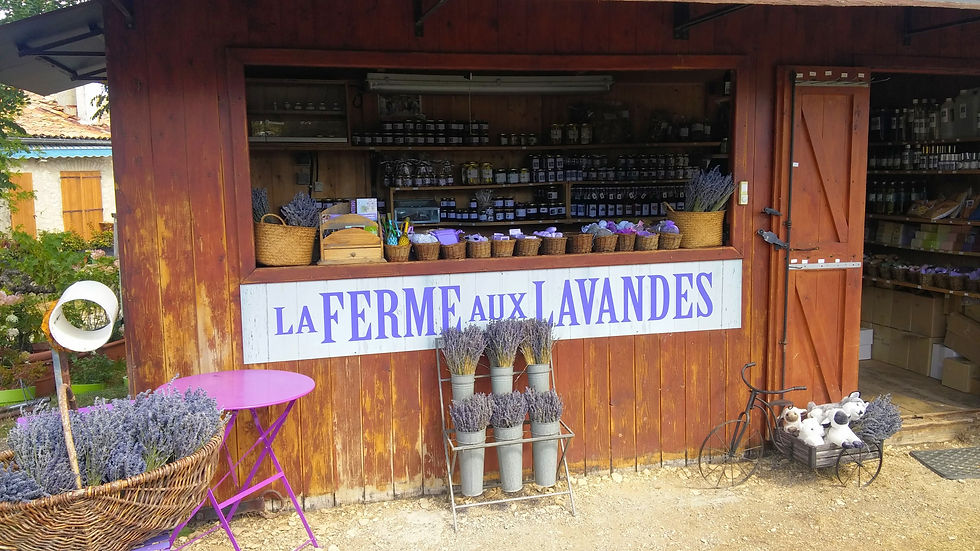
Tom and I generally enjoy climbing in the early evening to catch the beautiful last rays of sunshine, which create an alpenglow on the mountains. Another reason for this preference is that the roads are quieter and the temperature is cooler at that time.
I found this climb particularly challenging due to the strong wind. At several points, I had to stop—not only to take a few photographs but also to refocus my mind on the significant challenge ahead. Roughly two kilometres from the summit, Tom, who had already reached the top, came back down to offer me moral support. Together, we continued our ascent to the summit. It was a fantastic day and a tremendous effort, and we have already set a date to return and complete the climbs from the other two routes, Malaucène and Bédoin.

Climb Overview
The easy warm-up: 0-5.5km: Starting from Sault, the climb had no surprises as we studied the gradients and read several reviews. It begins by going through farmlands up to the village of Saint Colombe, and then the gradient kicks up to 9%, and you know the challenge has already started. The road is reasonably uncomplicated with no switchbacks and offers no rest for a further 10 kilometres until you reach Chalet Reynard. It is from here that the landscape drastically changes.
As you continue from Chalet Reynard, the climb becomes more demanding, with the famous Mont Ventoux looming ahead. The road narrows, and the vegetation changes to sparse shrubs and rocky terrain. The gradient increases steadily, and you can feel the altitude gaining with every pedal stroke. The iconic white tower at the summit serves as a beacon, motivating you to push harder.
The final stretch to the summit is both physically and mentally challenging. The wind picks up, adding another element of difficulty to the climb. However, the panoramic views of the surrounding Provence region are breathtaking, offering a sense of accomplishment and awe. Reaching the summit of Mont Ventoux is a momentous achievement, marking the end of a gruelling yet rewarding ascent.

The lunar landscape: 16-21.5km
At Chalet Reynard, nestled amidst the lush forest, you embark on a journey that promises an unforgettable experience. The path unfolds before you, stretching for six kilometres through the rugged white rock terrain towards the majestic summit. As you set out from Chalet Reynard, the gradient gently eases for a brief respite, allowing you to catch your breath and soak in the surrounding beauty. However, as you venture further and leave the comforting canopy of trees behind, a new challenge awaits in the form of the relentless wind. The gusts can be fierce, testing your resolve and determination.
Should you find yourself facing a brutal headwind, consider yourself fortunate to be pushed to your limits, both physically and mentally. Each step brings you closer to the summit, with each turn revealing a new perspective of the landscape below. The crisp mountain air fills your lungs, invigorating your spirit as you press on towards your goal. The journey is not just a physical one; it is a test of endurance and willpower, a battle against nature's elements. As you navigate the rocky terrain and face the challenges that lie ahead, remember that every obstacle overcome is a triumph, every step taken a victory. The path to the summit may be arduous, but the reward that awaits at the top is beyond compare – a breathtaking panorama that makes the entire journey worthwhile.

When you reach approximately 20km, you will come across the memorial dedicated to Tom Simpson, where a water fountain is located, providing an opportunity for a brief stop. Unlike the verdant slopes of the Pyrenees teeming with grazing animals and the calls of Red Kites and Griffon vultures, Ventoux offers a starkly different landscape. Here, silence reigns, interrupted only by the howling wind, as we continue our challenging journey.


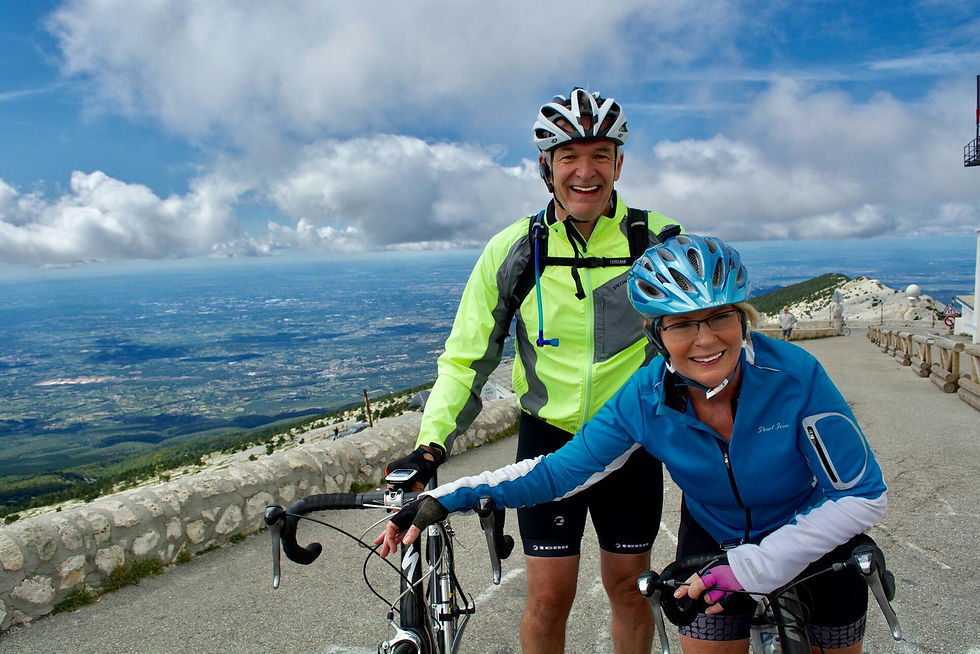
Upon reaching the summit, all the hardships fade away as you celebrate with fellow cyclists who have also conquered the challenge of Mont Ventoux. The suffering disappears as we already start planning our next ascent!
When someone inquires about my favourite part of Mont Ventoux, my typical response is "Crossing the finish line." The feeling of relief from completing such a physically demanding feat surpasses all the pain endured during the journey.


The descent:
The road down can be hair-raising. The gradient is severe, the road is often wet, and there are multiple hairpins and strong gusts of wind. Navigating a descent like this requires the utmost concentration and skill. As you start your journey down this treacherous road, the steep gradient immediately demands respect. The sheer drop on one side and the jagged cliffs on the other can make even the most experienced drivers feel a sense of unease. Add to that the unpredictable weather conditions that frequently leave the road slick with rain, increasing the already high level of danger. The hairpin turns that snake their way down the mountainside require precise handling and a steady nerve. Each bend presents a new challenge, testing your ability to judge speed and control the vehicle with finesse.
The constant switchbacks can be disorienting, making it crucial to stay focused and alert at all times. To make matters even more daunting, strong gusts of wind can buffet your vehicle, threatening to push it off course. The sudden shifts in direction can catch even the most vigilant cyclist off guard, emphasizing the need for a firm grip on the steering wheel and quick reflexes to counteract the external forces. In conclusion, descending this road is not for the faint of heart. It demands respect for the elements and a deep understanding of your vehicle's capabilities. Only those who approach it with caution, skill, and a healthy dose of courage can hope to navigate its challenges safely.
CAFÉ STOPS:
Chalet Reynard is a well-known stop along the route, situated about seven kilometres before the summit. It’s hard to miss, as you’ll find post boxes alongside the road, followed by wooden cabins and a sign for Chalet Reynard. The establishment features a bar-restaurant with both indoor seating and outdoor terraces, offering simple food and drinks. There is also a reasonable amount of parking available outside the restaurant. Additionally, at the summit, there is another restaurant that serves basic meals. You will need arm warmers, leg warmers and a windproof jacket for the summit. If the weather looks bad, pack and dress accordingly. Leave your deep-section wheels at home.
If it’s windy at the top of Ventoux, you won’t be happy. If you aren’t a wiry climber, use a compact chainset.
Plan your route before you visit.
Other than for the Sault route (where there are no markers), milestones every kilometre show: the average gradient for the next kilometre the number of kilometres to the summit; and the current altitude.
The road is relatively narrow in many places and expects lots of cars, particularly in summer.
Don’t underestimate the conditions on the summit, even in good weather, and/or when all is calm at your chosen starting point. The summit and the descent are very exposed and, crazy as it sounds, people are frequently blown off their bikes.
It if rains, debris may get washed onto the road.
Fog can also make things tricky.
In summer, the heat can be intense. Set off early.


Comments