Tour de France Mountain Stages
Updated: Jul 7
Watching the Tour de France in person
Attending the Tour de France and La Vuelta in person is an enchanting experience.
Having lived in the Pyrenees and attended the TDF since 2015, here is a new, updated guide from an experienced local, me.
My Top Tips for TDF 2026 and beyond: The Extreme Heat Survival Guide
Chasing the peloton through the Pyrenees or elsewhere in France this July? The legendary climbs are calling, but with temperatures hitting 38° to 42°C /100°F–108°F in the valleys, the old spectator playbook is officially outdated.
If you want to experience the magic of the high passes safely, you need to adapt to the new normal:
The Altitude Strategy: Skip the heat-sink valleys. Base your camp or accommodation above 1,000m where you can actually sleep and recover in cooler air.
Beat the Thermal Window: If you’re riding the climbs, start at dawn and wrap up by 9:30 AM. Tackling a major Col in 40-degree mid-day heat is a recipe for heat stroke.
Pack Like an Explorer: Ditch the basic water bottle. Bring a minimum of 1L of fluids/hour with high-quality electrolytes, cooling neck gaiters, and insulated phone pouches to save your battery from dying in the heat.
Protect the Mountains: Tinder-dry conditions mean extreme wildfire risks. Absolutely no open flames, no left-behind glass, and zero trace.
Let's keep the mountain magic alive, safely and sustainably.
Below, you can see highlights from 2015.
On July 5, 2023, Stage 5 from Pau to Laruns will feature the challenging Col de Marie-Blanque WEST side. Don't miss the women's TT in Pau on July 30, 2023. In La Vuelta, mark your calendar for Stage 13 on September 8, including the descent of Col du Pourtalet and the ascent of Col d'Aubisque. We will be present!

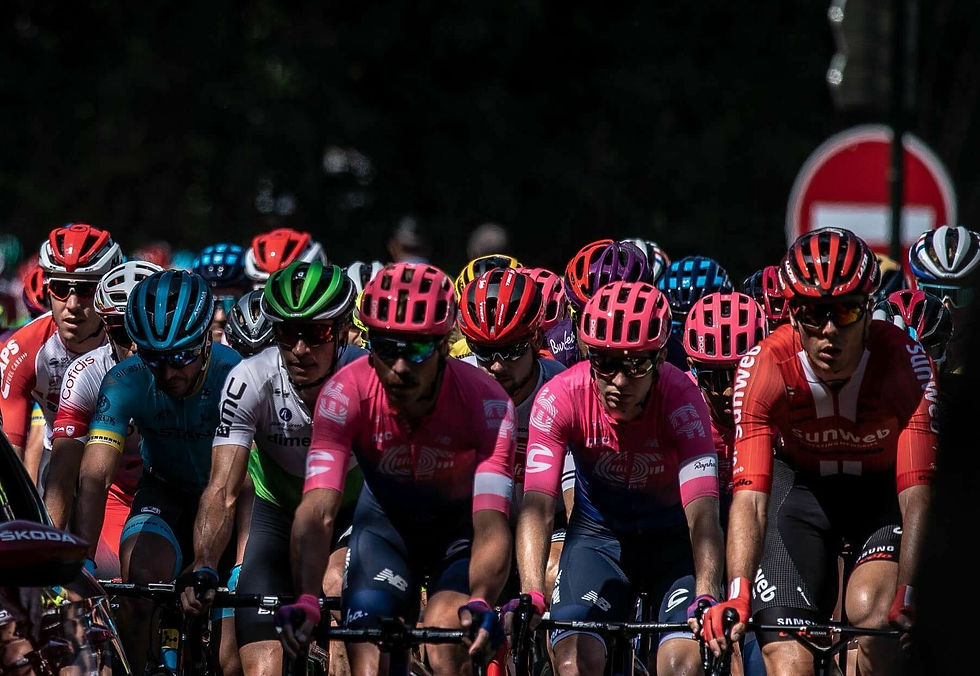
The Tour de France is renowned as the premier cycling event worldwide, offering a firsthand experience of the electrifying atmosphere and witnessing history in the making.
While the television broadcasts and aerial views of chateaus, mountains, and picturesque villages are impressive, nothing compares to the unique experience of being there in person. Following the Tour de France and watching it live is truly extraordinary.
Residing on a renowned Tour de France mountain route, we have been present at the events since 2016. And now, without delay, here is our Tour de France spectator handbook. Have a great time!
Our typical approach involves examining the route map and the stage locations. Tom and I specifically target stages near the mountainous areas. Subsequently, we identify popular landmarks along the route and devise a cycling itinerary.
While most week-long trips typically include all types of stages, we particularly enjoy the mountain stages. These stages allow you to experience the excitement up close, challenge yourself on the route, have sufficient time to watch the riders pass by, and select your favorite cyclists. Additionally, the publicity caravan passes through, providing more opportunities to collect Tour de France souvenirs (also known as "Tour swag")!
You can obtain the "Official Roadbook" (the one provided to the teams) from theVelorooms website. The Roadbook includes profiles, schedules, road closures, team hotels – everything you need! It's an invaluable resource.
Pro tip:
We typically print out the pages for the stage we plan to attend and bring them along to easily refer to locations, times, etc.
After determining our available time and preferred focus area, we identify several potential locations spread out over a few days of the Tour in that specific region.
If we are unfamiliar with the area, we utilize Google Maps to ensure that the campervan parking and our base are centrally located to the routes we intend to watch. However, during the Tour, we discovered that most towns and villages were accommodating regarding parking as they understood that visitors would not stay for long.

If you're not travelling in a camper van or motorhome, keep in mind that hotels and guest houses tend to fill up quickly once the route details are released by the organizers around October of the previous year. We have always brought our bikes, but if you plan to rent bikes, make sure to do so early. Once again, make your reservations early!
The top advice is to ride along the route as much as possible and explore the best spots to watch the Tour.
Typically, the road closures advertised for the Tour de France are not overly strict for cyclists heading to their desired viewing spots, as these closures primarily target motor vehicles. However, some particularly zealous gendarmes may prevent you from passing their checkpoints once the designated "fermée" or "route barée" time arrives. In such cases, they usually instruct you to "pied" (walk), which we comply with until we are out of their sight, before resuming cycling (if it is safe to do so) for as long as possible. We remain alert, and if we detect any sirens, traffic, or the approach of the caravan, we promptly dismount and move out of the way.
Typically, locations along the famous climbs tend to fill up rapidly, particularly in proximity to the finish line.

Our goal is to tackle the climb or route early on, exploring for scenic viewpoints, cafes, or vantage points like rocky outcrops or gardens that would offer great photo opportunities. After covering as much of the course as we can, we can easily return to our chosen spot for the day. The advantage of having bikes is the flexibility to move to a different location if our initial choice doesn't meet our expectations.
Refer to the Roadbook. For instance, the "feed zone" offers a unique Tour experience and an opportunity to interact with soigneurs while observing their interactions with their teams. In the feed zones, there are designated areas for riders to discard bidons. At times, these areas are not very crowded, resulting in an abundance of bidons. Soigneurs may have extra bidons and musettes that riders did not take during their time in the zone.
They may not want to carry them around or might not have another chance to pass them to their riders, so they distribute them after the peloton has passed. Look out for large parking lots in departure/arrival villages. These are commonly used to replenish the caravan with supplies and offer a great opportunity to acquire additional swag.
Throughout the COVID-19 pandemic, we made a conscious effort to steer clear of large gatherings. As an illustration, during the 2020 Tour de France, we decided to spend the night camping on the way down from the Soudet, ensuring that we would have the entire Tour all to ourselves. The experience was absolutely fantastic!
When a stage concludes atop a mountain, team coaches/trucks may not have access at the base of the climbs. Riders must cycle back down to the coaches, signaling with whistles to clear the crowds. Waiting and joining them on the descent is quite straightforward.
The ideal timing varies based on the location's popularity. Mountain stages tend to fill up well in advance, while less popular stages allow for finding a spot up to an hour before the peloton arrives. At times, gendarmes may restrict movement, but we have still managed to navigate and secure a better viewing position.
Your supplies should align with the ride length and route specifics. Prior research using Google Earth can help determine your needs for the day.
Typically, there is a village near viewpoints where you can purchase supplies, and local entrepreneurs often set up pop-up snack bars. However, these options can be unreliable, so we generally bring extra sandwiches and water in a backpack, which we replace with Tour swag as the day goes on.
**Top Tip:**
Be sure to bring a bag or backpack to store all your "Tour swag"! The caravan throws out a lot of items, and everyone enjoys receiving a Madeleine or an LCL-branded cap.
We've all witnessed the videos and images of spectators causing accidents while watching the Tour. The following guidelines are aimed at helping you avoid getting involved in a disaster:
Avoid swinging or leaning too far over the barriers, as riders passing closely could end up in a calamity this way.
Don't wait until the last moment to step back from your "perfect" viewing spot right in front of an oncoming rider. There might be someone right behind you, and the next thing you know, everyone is on the ground. Not the ideal way to get your face on TV!
Watch out for camera straps, backpacks, and bags that could get tangled, causing you (and possibly the yellow jersey) to stumble.
Please take all your trash home, including gel wrappers, or dispose of them in a nearby bin or bag.
Smoke bombs and flares? Seriously, just don't even consider it.
The peloton moves swiftly in most areas, so if you focus on taking photos, you might miss them. While there's always an opportunity for a few snapshots, try not to miss the main action! Unless, of course, your goal is to capture some prized photographs. It all depends on what you hope to experience from attending a live tour.
We cherish our Tour photographs, and for me, they are the highlight of the stage. After the peloton, particularly the "broom wagon," has passed, a car with a blinking sign will indicate that the road is open again. At this point, you are free to depart. Keep in mind that the roads can be crowded, with many trying to emulate their heroes' downhill skills, although usually not nearly as fast.
Don't forget that the Tour will only take in specific climbs in areas that you may be in too. For example, it's a shame to be on the doorstep of the Aubisque and only go up one side of it. So do some research in the area you plan to visit and maybe even take a day off from the Tour to tick off some bucket list adventures.

I hope you've enjoyed this short guide and that it helps you avoid some of our early mistakes. If you would like further information, please ask in the comments below. Safe travels, and enjoy your trip.
Here is a link for all you need to know about this year's Tour de France stages

Comments